
Our Story
There has to be a better way to do this.
When Charlie was 18, she went to Cambodia for a month to volunteer in a school through a volunteer tourism program. She had saved money from the age of 16 to pay for the trip, only to realise once she arrived that none of the money she had paid had anything to do with the project itself. It covered accommodation, some food, and getting to and from the school — but the school still needed supplies, electricity, resources and basic functional support. Instead, an 18-year-old with no teacher training and no real direction was placed in a classroom to teach English. It felt like once she arrived, the organisation had dusted its hands of her.
That was the first time the thought properly landed: there has to be a better way to do this.
The discomfort was not with the desire to help. It was with the system around it. There were skilled professionals in Cambodia with real abilities, a genuine heart to be there, and no meaningful way to use their skills properly. There were volunteers paying thousands of dollars, communities with obvious practical needs, and no clear connection between the money, the people, and the project.
That idea sat there for almost a decade. Then COVID happened, and with it came the very clear realisation that there is one life, life is fairly unpredictable, and doing something meaningful would be a better use of a brain than waiting forever for the perfect time. Mates Fund grew from that.
Why Fiji
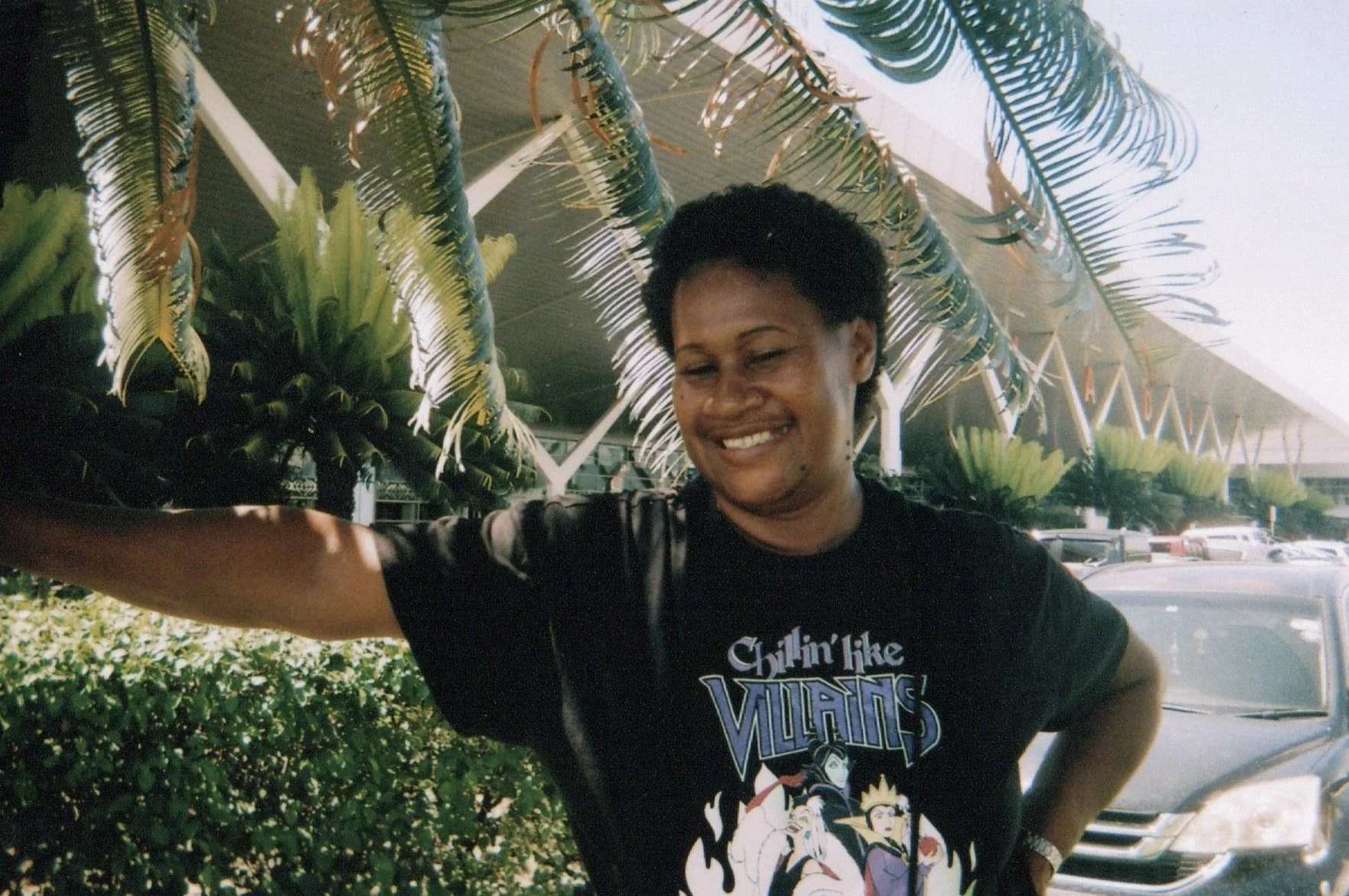
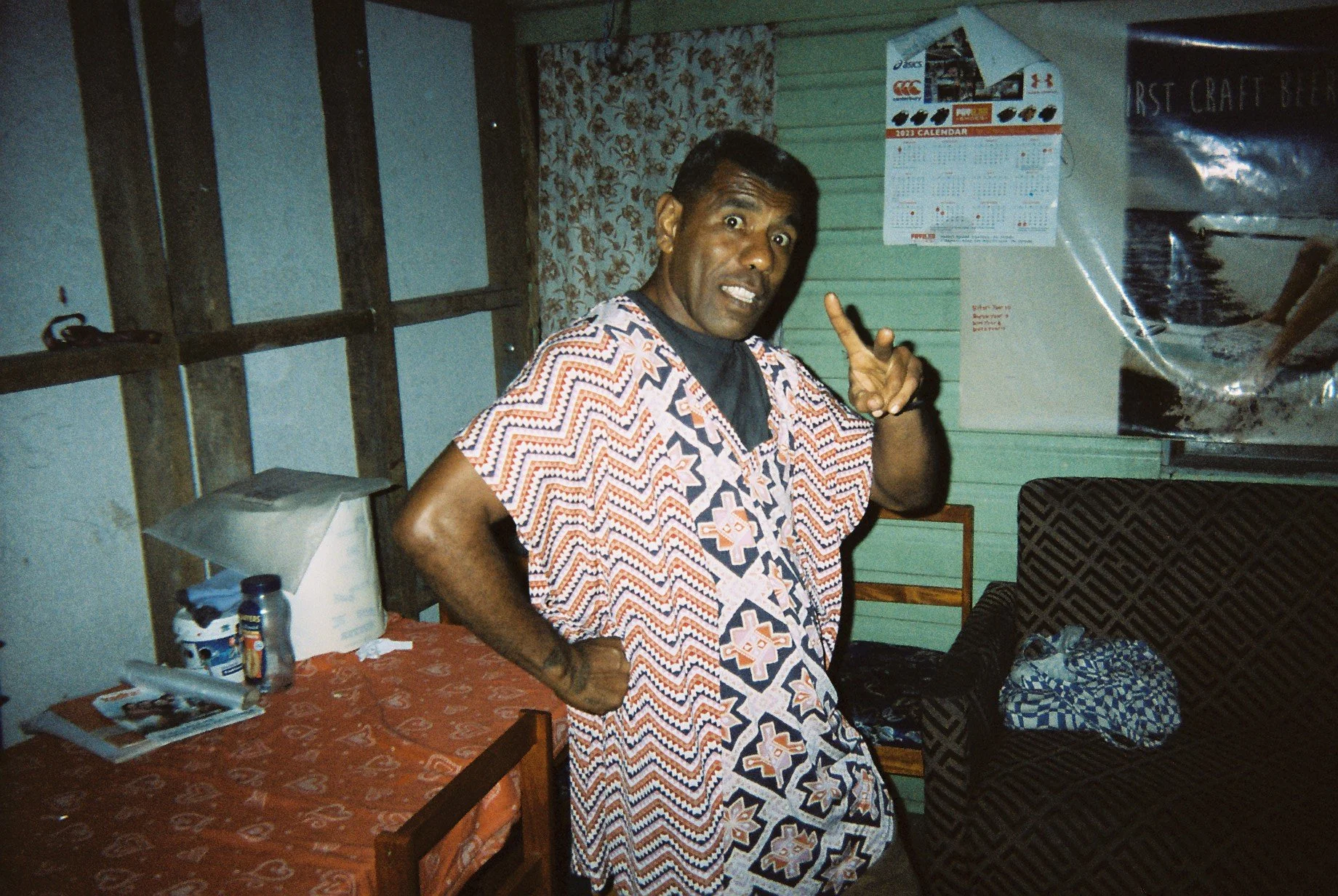
The work began in Fiji for a few reasons. Charlie had been going to Fiji since she was a child and had always loved it — the people, the culture, the closeness to Australia, and the feeling of being welcomed into everyday life. But the real reason was relationship. Charlie was connected with a beautiful woman who became her Nana, Salote, and through her, with her family, including Abo, and the broader community in Namatakula. They welcomed her with open arms. Over time, it felt less like visiting and more like being part of everyday life there. So starting in Fiji felt like a no-brainer.
It also made sense in a bigger way. The Pacific Islands are on the frontline of climate change. Building better systems in that environment felt like a meaningful long-term position to take, because the need is only going to increase. Fiji, as one of the largest Pacific nations, is also likely to become increasingly important as climate impacts grow across the region. For Mates, Fiji was not chosen because it was easy. It was chosen because of the people, the relationships, the climate reality, and the chance to build something meaningful from the ground up.
When it became more than helping out
At first, the work was informal. We collected donations in Australia and took them over to Fiji in our luggage. Clothes, supplies, sports gear, anything useful that could fit in a bag. Then one of the local boys spoke about the water tanks… The Fiji Government had provided many households with water tanks through an application process, which one of the local girls in Namatakula had generously helped people complete. But the tanks were not usable unless they were properly set up with guttering, platforms, fittings and labour. The problem was not that people did not want water access. The problem was that the cost of the materials and labour was inaccessible.
It was about $186.50 AUD in materials to gutter and set up a tank. That amount was out of reach for many families. From Australia, it was fundable.
So we started with one. Now we have completed more than 50, and we expect to reach around 100 by the end of the year. That changed everything. It made clear that often the barrier is not imagination, care or willingness. It is access. It is money. It is materials. It is labour. It is someone helping connect the missing pieces. For communities being slapped in the face by the WEIRD world, that barrier can become an unmanageable problem to handle alone. Mates exists to help carry some of that load — without taking the lead away from the community itself.
What we learned
A lot of the early learning was shaped by Charlie’s anthropology degree. Anthropology asks uncomfortable but necessary questions: who decides what the problem is? Who gets to define the solution? Who is being listened to? Who is being overlooked? That mattered.
Even though we would never claim to have done extensive fieldwork, spending time in community with those skills of close observation made some things very obvious. Listening first matters. Relationships matter. Being part of community, rather than sitting outside it and making assumptions, changes what you notice. It also made clear that matriarchy is a very valid form of management. That has shaped Mates internally and externally. We try to value the kind of leadership that notices, coordinates, remembers, checks in, and keeps people connected. We try to build from relationships first, then solve problems — rather than diving in with the best intentions and creating things that are not maintainable or not cared for in the way they were intended.
Growing to Pakistan as well
Pakistan became Mates Fund’s second country through two Australian boys travelling near the base of K2. They met a group of teachers working across the valleys in Pakistan, who spoke with them about existing scholarship programs started by tourists. Those programs had advantages and disadvantages, and the boys had a strong idea of how they wanted to do things differently. The goal was not just to hand over money. It was to find the right candidates properly.
Teachers are still central to the process, but the scholarship model also includes a thorough questionnaire to understand each student’s living conditions, family context, motivation, exam results, teacher recommendations and why they want to continue school. The scholarship does not just cover tuition. It also covers the costs that can become the real barrier to entry: accommodation, transport, books, food and the practical costs of studying away from home. Pakistan scholarships made sense under Mates because the model was the same.
Listen to local people. Understand the real barrier. Work with trusted relationships. Fund the practical things that make a solution possible.
What Mates is here to do
Mates is not here to save anyone. Mates understands that the WEIRD world does money really well and living not so well. The communities we work with have a lot to teach us about how to do life — together, with one another, and with a deeper sense of shared responsibility. So the point is not to arrive and rescue. The point is to connect the money to the living, so that quality of life can be raised out of poverty without pretending that wealthier countries have all the answers.
Mates is here to do charity differently. It is also meant to be fun. The things we deal with are not always fun, but the process of getting to solutions and getting to funding should carry energy, purpose and joy. People are doing this as volunteers, in their own time. That matters. Mates works best when people come to us with great energy, wanting to change the world, and are willing to reflect on the skills they already have to bring: that might mean knowing how to use Google Docs. It might mean labelling documents in a Google Drive. It might mean knowing someone who knows someone with a radio show. It might mean finance, law, communications, governance, design, fundraising, education, research, or project support.
The point is that everyone has the capacity to contribute something. For us, the shame is not having privilege. The shame would be refusing to use it carefully.
How We Govern
Mates Fund is volunteer-run and governed by an unpaid board of directors. The board is responsible for the organisation’s strategy, finances, risk, safeguarding, project decisions and long-term accountability. Decisions are made by consensus, and directors take responsibility for the projects and areas they manage. We want people to understand that Mates is full of warmth, energy and humour, but it is not casual about responsibility. We are building proper oversight around the work because the work matters. The money matters. The relationships matter. The communities matter.
Mates is serious about doing charity differently — and serious about doing it properly.
The Board (a-z)
Audrey Sayer
Director
Audrey is a Director of Mates Fund and leads Mates Australia.
She is currently completing a Master of Social Policy at the University of Melbourne, with a specific interest in disability support and social policy. She also completed 2 years of Peace Corps volunteering in remote Fiji. Audrey is excellent at writing policies and grounding our understanding of the work we are doing. Once we understand a problem from the community, Audrey helps connect that with the available academia, policy context and evidence.
She is passionate about growing Mates into something as meaningful as humanly possible.
Charlie Byrne
Founder and Director
Charlie is the founder of Mates Fund and oversees Mates Fiji. She also supports and mentors volunteers, leads much of the administrative thinking behind the organisation, and helps turn big ideas into systems that can actually hold the work.
Charlie has a degree in Anthropology from the University of Sydney and brings that lens into the way Mates understands community, power, problems and solutions.
Charlie is a twice-exceptional autistic woman who cannot help but look at everything. Most people look at the forest for the trees, and autistic people look at the trees for the forest. Charlie is looking at the way the ocean affects the forest in the first place — and how gravity affects all of it. She brings the macro view.
Jonty Zarew
Director
Jonty is a Director of Mates Fund and works closely on Mates Pakistan.
He has a degree in Science and a Master’s in Climate Science, and brings a wealth of knowledge from the nonprofit space. He is often the person who can point the board in the right direction by reflecting on his own experience and understanding of how nonprofit work operates.
Jonty’s energy is full of purpose, and he is usually the first to make the whole board die laughing.
Lachlan Fitzgerald
Director
Lachlan Fitzgerald is a Director of Mates Fund and a local business owner.
He brings extensive knowledge of business processes and has supported the establishment of Mates from the ground up with as much professionalism as we can muster.
Lachlan provides practical business insight, operational thinking and grounded advice about how to build systems that work in the real world.
William “Billy” Byrne
Director and Treasurer
Billy is a Director and Treasurer of Mates Fund. He supports strategic planning, financial oversight, governance and the development of Mates Pakistan.
Billy has a Bachelor of Commerce from the University of Sydney, majoring in Management. He brings business knowledge, financial thinking and practical structure to the organisation.
He is also the most personal person you will ever meet. There is no one on planet Earth — and he has been all over it — who does not smile when they think of Billy.